
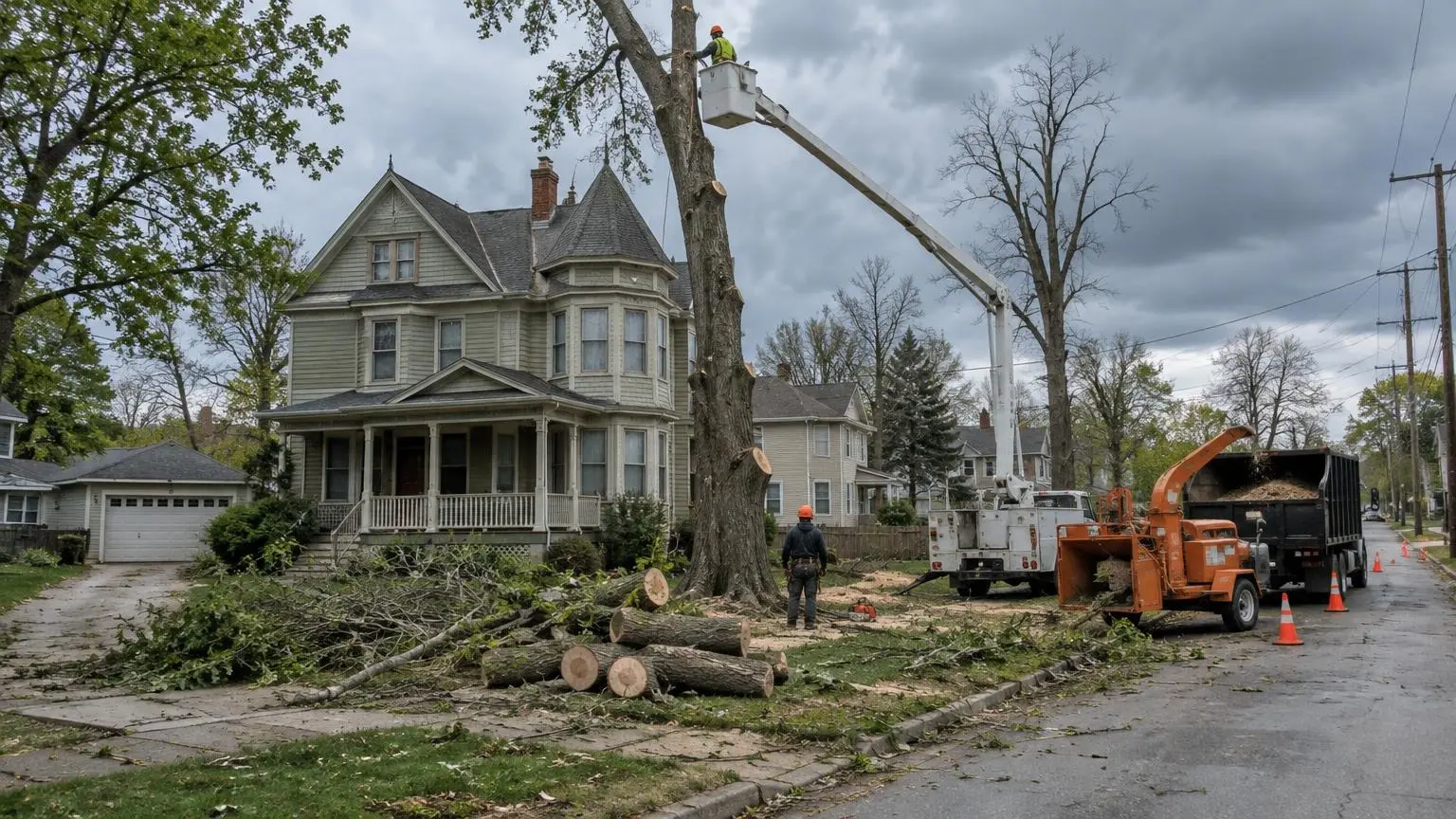
From 6,391 people to 23,045 in one decade
Tree Removal in Orland Park, IL
Trees planted in Orland Park's biggest growth spurt are now 40 to 50 years old.
- We price jobs standing in your yard, anywhere in Joliet and Will County
- A written quote that itemizes every tree
- Brush, logs and chips handled the way you ask
The 1970s Boom, Forty-Plus Years Later
Tree Removal in Orland Park is very much a story of the 1970s. The village was settled as Orland in 1834 by Henry Taylor and incorporated on May 31, 1892, but it stayed small for most of a century, with 788 residents in 1950. Then came the boom: 2,592 people in 1960, 6,391 in 1970 and 23,045 in 1980, a 260% jump in one decade. It kept growing to 51,077 by 2000 and 58,703 in 2020. The trees planted in those 1970s and 1980s subdivisions are now 40 to 50 years old, big, and in many cases reaching the point where they start to decline.
Trees of that era
The trees widely planted in suburbs during that period included fast-growing shade trees like silver maple, ash, honey locust and ornamental pear, along with spruce and pine for screening. Many of them have aged predictably:
- Silver maples grow huge, form weak forks and drop limbs in storms
- Ash has been largely killed off by emerald ash borer, which spread across northern Illinois
- Ornamental pears split apart as they age, often in a single storm
- Spruce rows grow together and die from the bottom up
Not every older tree has to go. A healthy tree with good structure can be pruned and kept for decades. But a tree with a big crack, a hollow base or a dead top is better removed on your schedule than after it fails.
Older owners, long tenure
Census QuickFacts reports that 24.8% of Orland Park residents are 65 or older, one of the highest shares in the area, and 85.8% of homes are owner-occupied, with a median owner-occupied value of about $367,200. Many owners have lived in their homes since the trees were planted. That history is part of the conversation: people know which tree they planted, which one the previous owner did, and which ones have been dropping limbs for years.
Where Orland Park sits
The village covers about 22 square miles, mainly in Cook County (Orland, Palos and Bremen townships) with a small part in Will County's Frankfort Township. Interstate 80 forms its southern border. Its main bodies of water are Lake Sedgewick, about 95 acres, and McGinnis Slough, and Centennial Park covers 192 acres. Homes near the water and the parks often have older, larger trees and softer ground, which affects how equipment gets in.
How we run an Orland Park job
1. You call (779) 324-4241 or send the form, with photos if you have them. 2. We visit, look at the tree and the access, and talk through whether it can be kept. 3. You get a written estimate with removal, stump grinding and cleanup listed separately. 4. On the day, the tree comes down as described, brush is chipped, wood is hauled or left, and the yard is cleaned.
Orland Park Details
- A 1970s boom town. Orland Park grew from 6,391 residents in 1970 to 23,045 in 1980, a 260.6% increase, and reached 51,077 in 2000 and 58,703 in 2020, with 23,746 housing units.
- Older population. Census QuickFacts reports 24.8% of residents 65 or older, an 85.8% owner-occupied rate and a median owner-occupied value of $367,200 (2020-2024 ACS).
- Water and parks. The village's main bodies of water are Lake Sedgewick, about 95 acres, and McGinnis Slough, and Centennial Park covers 192 acres. Interstate 80 forms the southern border.
- A tree code that reaches private yards. Orland Park's Tree Management Program (Chapter 3-6, Ordinance 5727, 2022) requires owners to keep limbs over streets and sidewalks at least 8 feet clear and to remove dead, diseased or dangerous trees. If the village finds a hazardous private tree, it sends written notice and the owner has 60 days to remove it before the village can do it and file a lien.
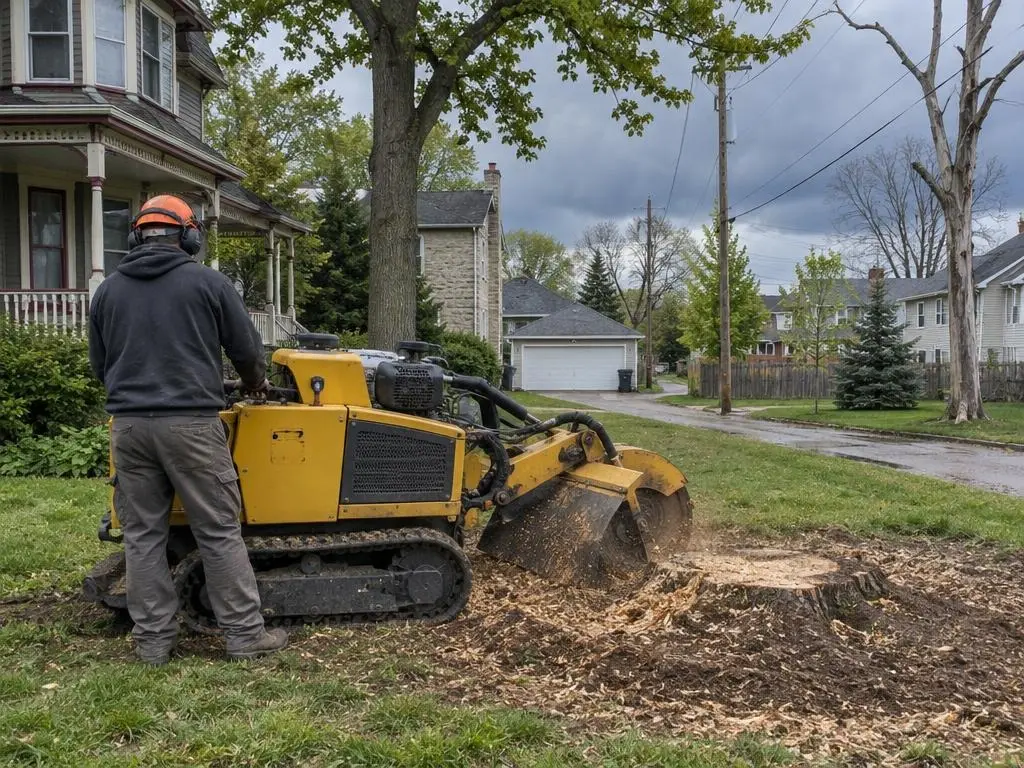
Our Services in Orland Park, IL
Orland Park Questions
My honey locust is dropping branches. Should it come out?
Honey locusts are generally tough, but older ones can develop decay and canker diseases that kill branches. If dieback is spreading through the crown, or the trunk has cankers and cracks, removal may be the better choice. If it is just a few dead limbs, pruning may be enough.
How do I know if my 45-year-old tree is near the end of its life?
Watch for a thinning crown, dead branches in the top, large cracks, decay or fungus at the base, and roots lifting on one side. Lifespan varies a lot by species; a sound oak can live for centuries, while a silver maple or ornamental pear often declines much sooner.
Do you work near Lake Sedgewick and McGinnis Slough?
Yes. Homes near the water often have bigger trees and softer ground, so we plan access carefully and use mats where needed.
I got a notice from Orland Park about a dead tree. How long do I have?
Under the village's tree code, the owner has 60 days after written notice to remove a dead or diseased tree the village considers hazardous. After that the village can remove it and place a lien for the cost. Call (779) 324-4241 soon after the notice arrives, and we will get you a written quote well inside that window.
Free Estimates in Orland Park, IL
Free written estimates for Orland Park homes, in Cook and Will County.
Tree Removal Near Orland Park
- Tree Removal in Joliet, IL
- Tree Removal in Lockport, IL
- Tree Removal in New Lenox, IL
- Tree Removal in Shorewood, IL
- Tree Removal in Crest Hill, IL
- Tree Removal in Romeoville, IL
- Tree Removal in Mokena, IL
- Tree Removal in Frankfort, IL
- Tree Removal in Minooka, IL
- Tree Removal in Channahon, IL
- Tree Removal in Plainfield, IL
- Tree Removal in Manhattan, IL
- Tree Removal in Homer Glen, IL
- Tree Removal in Elwood, IL
- Tree Removal in Wilmington, IL
- Tree Removal in Braidwood, IL
- Tree Removal in Coal City, IL
- Tree Removal in Lemont, IL
- Tree Removal in Morris, IL
- Tree Removal in Monee, IL
- Tree Removal in Tinley Park, IL
- Tree Removal in Frankfort Square, IL
- Tree Removal in Bolingbrook, IL