
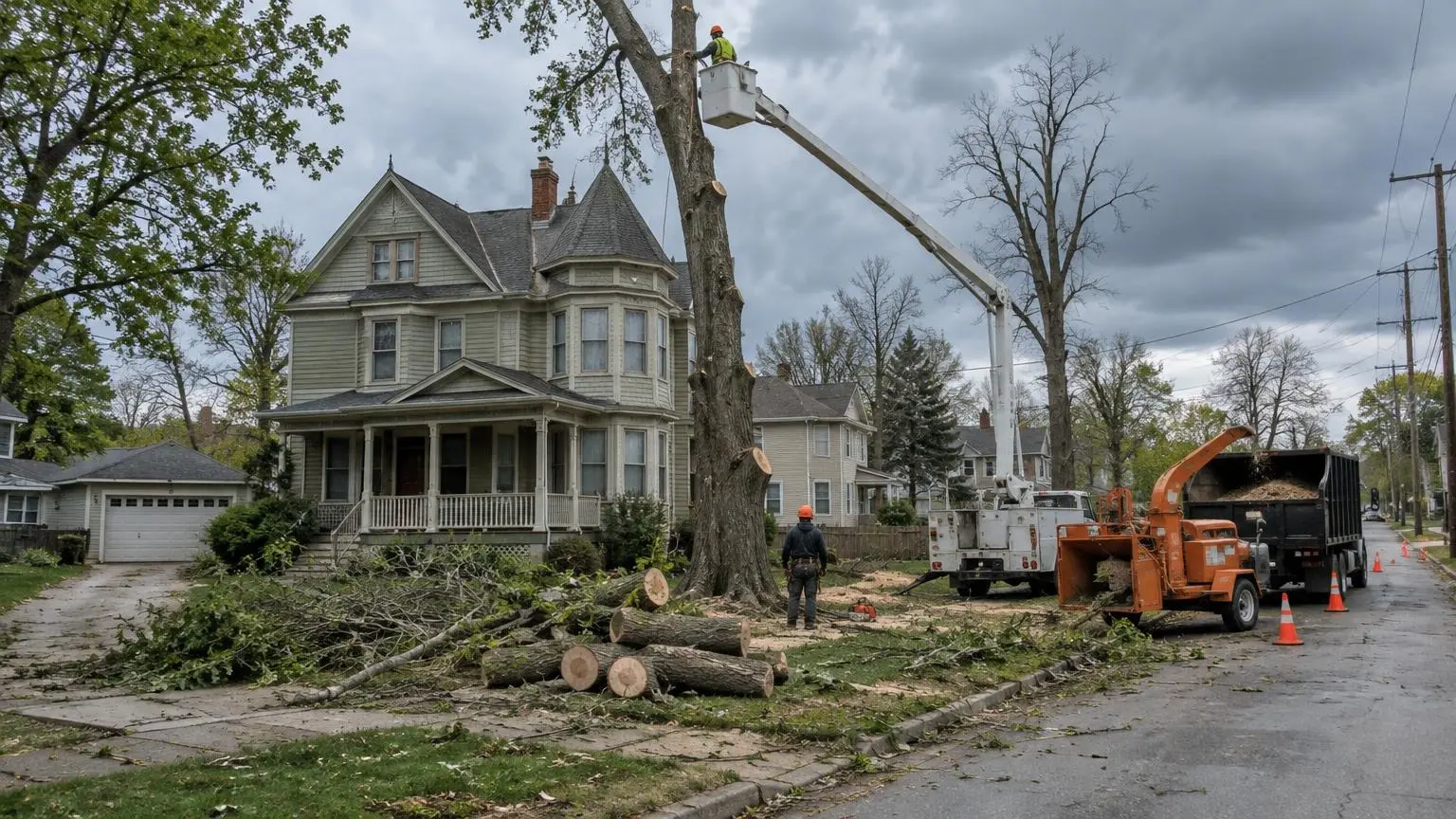
Pruning that keeps trees standing
Tree Trimming & Pruning in Joliet, IL
Cuts made to industry standards, timed for the species, aimed at fewer storm failures.
- We price jobs standing in your yard, anywhere in Joliet and Will County
- A written quote that itemizes every tree
- Brush, logs and chips handled the way you ask
Cutting Less, Cutting Right
Tree trimming and pruning are often what keeps a tree from needing removal later. A well-pruned maple loses fewer limbs in a summer thunderstorm, an oak cut at the right time of year stays clear of oak wilt, and a young tree trained early grows into a sturdy shape instead of a weak fork. In Joliet we prune trees of every age, from fast-growing subdivision maples that are starting to brush the roof to century-old trees on the east side that have not been touched in decades.
What good pruning looks like
Professional pruning in the US follows the ANSI A300 standard, which sets out how and where cuts should be made. In practice that means cutting just outside the branch collar, the swollen ring where a branch meets the trunk, so the tree can seal the wound. It means removing a limited share of the live crown at one time, because taking too much starves the tree. And it means no topping. Cutting a tree's main stems back to stubs causes a mass of weak sprouts that break easily and decay at the cut. If a quote anywhere promises to top a tree, ask for a different approach.
Types of pruning we do
- Deadwood removal: taking out dead and dying branches, the most common source of falling limbs.
- Clearance pruning: lifting branches over a roof, driveway, sidewalk or street, and away from siding and gutters.
- Crown thinning: removing select branches to reduce weight and wind resistance without changing the tree's shape.
- Crown reduction: shortening long limbs back to strong side branches where a tree has grown too large for its spot.
- Structural pruning on young trees: choosing one main leader and removing competing stems before they form weak forks.
Timing matters for oaks
Oak wilt is a serious tree disease in Illinois. The fungus spreads between oaks through grafted roots, and sap beetles carry it to fresh wounds in spring and early summer. Red oaks, including northern red and pin oaks common in Chicago-area yards, can die within weeks of showing symptoms. White and bur oaks hold up better but can still be damaged. The standard Midwest advice is to avoid pruning or wounding oaks from April through October. We schedule oak pruning from late fall through winter, after a hard frost. If an oak is damaged in summer and has to be cut, the wound is covered right away.
Timing for other trees
Most shade trees, maples, lindens, honeylocusts and elms among them, can be pruned in late winter while dormant. The branch structure is easy to see without leaves, and the tree has the whole growing season to start closing wounds. Maples may drip sap from winter cuts, which looks alarming but does not hurt the tree. Trees that bloom in spring, such as crabapples and serviceberries, are best pruned right after they flower. Dead, broken and storm-damaged branches should be removed whenever they are found.
Near wires and the street
ComEd manages the trees around its lines and trims along main distribution lines on a multi-year cycle, using directional pruning rather than topping. Branches touching or close to a line should be reported to ComEd (1-800-334-7661), not cut by a homeowner or a general tree crew. Low limbs over a Joliet street are a city matter if the tree is in the parkway: the Forestry Division prunes parkway trees that block sight lines and signs, and Roadways takes off limbs that get in the way of plows and street sweepers. Call the city for those and save your budget for the trees in your yard.
What You Can Book
Pruning work is matched to the tree's age, species and problems.
Deadwood removal
Dead, dying and broken branches cut out before they fall.
Roof and driveway clearance
Branches lifted and shortened away from shingles, gutters, siding and the drive.
Crown thinning and reduction
Weight and wind load reduced on big, heavy trees without topping them.
Young tree training
Early structural cuts that prevent weak forks and rubbing branches.
Dormant oak pruning
Oak work scheduled for late fall and winter to lower the risk of oak wilt.
Tree Trimming Costs at a Glance
| Job | Published range |
|---|---|
| Average tree trimming (HomeGuide) | $400 to $900 |
| Tree up to 30 ft (HomeGuide) | $250 to $700 |
| Tree 30 to 60 ft (HomeGuide) | $600 to $1,200 |
| Tree over 60 ft (HomeGuide) | $1,000 to $2,500+ |
| Maple (HomeGuide) | $400 to $1,000 |
| Oak (HomeGuide) | $450 to $1,500 |
| Minimum job fee (HomeGuide) | $100 to $300+ |
National ranges from HomeGuide (2026). How much is removed, access and wires change the price. Your written estimate is the price.
What Happens on the Day
1. Look at the tree
We note species, structure, dead wood and what you want the pruning to fix.
2. Pruning plan
A written list of which branches come out and why, with the price.
3. Prune
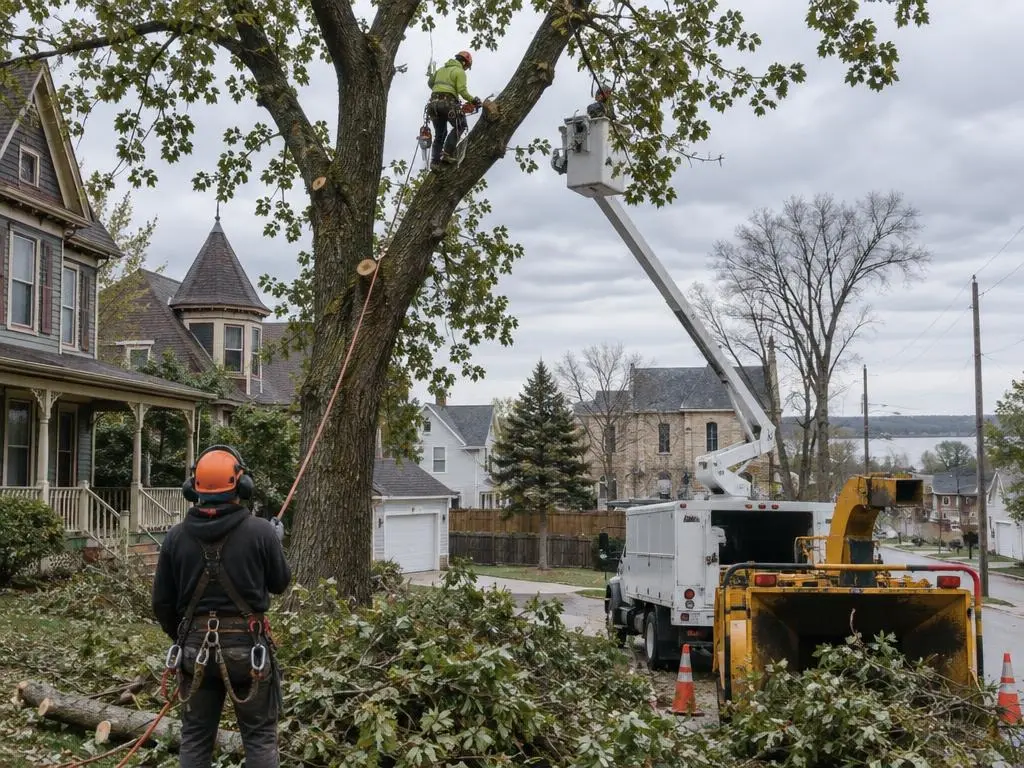
Cuts made at the branch collar, with limbs over roofs lowered on ropes.
4. Cleanup
Brush chipped and hauled or left as mulch, and the yard raked.
Tree Trimming & Pruning Questions
How often should trees be pruned?
Young trees benefit from structural pruning every few years while they grow. Mature shade trees often do well with a pruning every three to five years, or after storm damage. Trees over roofs may need clearance work more often.
Is tree trimming the same as pruning?
People use the words interchangeably. Some use trimming for clearance and shaping cuts and pruning for work aimed at the tree's health and structure. Either way, cuts should follow the ANSI A300 standard.
Can you trim a tree that hangs over from my neighbor's yard?
In general you can trim branches back to your property line, but the work should not kill or seriously damage the tree. Talking with your neighbor first avoids disputes. We keep cuts at sound branch points, not ragged stubs at the fence line.
Why can't my oak be pruned in summer?
Fresh wounds on oaks attract the sap beetles that spread oak wilt, which can kill red oaks within weeks. Waiting until late fall or winter greatly lowers that risk.
Should I top my tree to make it smaller?
No. Topping leaves large stubs that decay and triggers dense, weakly attached sprouts. Crown reduction, cutting limbs back to strong side branches, makes a tree smaller while keeping it sound.
Tree Trimming & Pruning Service Areas
- Tree Removal in Joliet, IL
- Tree Removal in Lockport, IL
- Tree Removal in New Lenox, IL
- Tree Removal in Shorewood, IL
- Tree Removal in Crest Hill, IL
- Tree Removal in Romeoville, IL
- Tree Removal in Mokena, IL
- Tree Removal in Frankfort, IL
- Tree Removal in Minooka, IL
- Tree Removal in Channahon, IL
- Tree Removal in Plainfield, IL
- Tree Removal in Manhattan, IL
- Tree Removal in Homer Glen, IL
- Tree Removal in Elwood, IL
- Tree Removal in Wilmington, IL
- Tree Removal in Braidwood, IL
- Tree Removal in Coal City, IL
- Tree Removal in Lemont, IL
- Tree Removal in Morris, IL
- Tree Removal in Monee, IL
- Tree Removal in Tinley Park, IL
- Tree Removal in Orland Park, IL
- Tree Removal in Frankfort Square, IL
- Tree Removal in Bolingbrook, IL
Get a Tree Trimming & Pruning Estimate
Free pruning estimates in Joliet and nearby towns.