
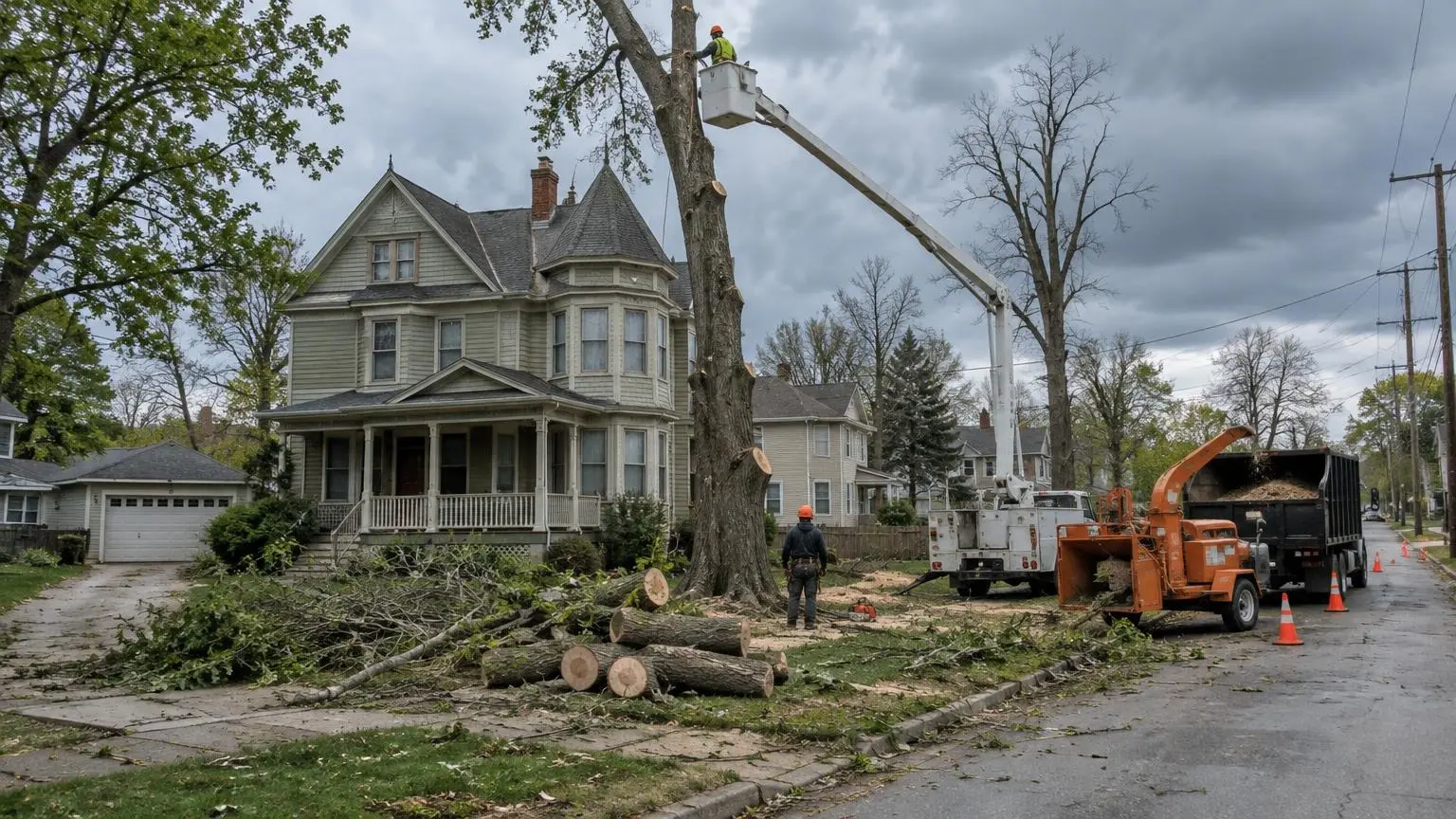
Dead ash and hazard trees
Dead Tree Removal in Joliet, IL
Removing brittle, decaying trees while they can still be climbed safely.
- We price jobs standing in your yard, anywhere in Joliet and Will County
- A written quote that itemizes every tree
- Brush, logs and chips handled the way you ask
Dead Wood Gets Harder to Handle Every Year
Dead tree removal is a job that gets harder the longer it waits. A tree that died last year can usually be climbed, rigged and taken down like any other. A tree that has stood dead for several summers in Joliet's heat and freeze cycles is a different problem: the wood dries, cracks and decays, limbs snap off when a rope is tied to them, and a climber may not be able to trust the trunk at all. That is when a lift or crane becomes the only safe option, and the price goes up with it. If you have a tree that leafed out poorly this year or not at all, it is worth having someone look at it now.
Emerald ash borer and Joliet's ash trees
Ash was planted heavily in Chicago-area yards and parkways, and emerald ash borer has been killing it across northern Illinois for years. The beetle's larvae feed under the bark, cutting off the tree's water and nutrient flow, and in an infested area nearly all untreated ash are expected to die within about ten years. Signs to look for:
- Thinning leaves and dead branches at the top of the crown
- Pale patches on the trunk where woodpeckers have stripped bark to get at larvae
- Small D-shaped exit holes in the bark
- S-shaped, winding tunnels under loose bark
- Clusters of new shoots sprouting from the trunk low down
Dead ash is known for becoming brittle quickly. The ash removed early are the easy ones.
Other dead and dying trees we see
Not every dead tree is an ash. Silver maples on older lots often decay from old pruning wounds and storm breaks. Spruce in subdivision yards decline from needle diseases and drought stress. Red oaks can die from oak wilt within a single season, sometimes within weeks of the first wilting leaves. Trees whose roots were cut for a driveway, sewer line or addition can decline slowly for years. Each of those has its own warning signs, and part of our visit is telling you what likely killed the tree and whether the trees near it are at risk.
Judging a hazard tree
A dead or dying tree is a hazard when it could hit something if it fails. A dead tree at the back of a large lot, leaning away from everything, may be fine as wildlife habitat for a while. The same tree over a bedroom, a garage, a sidewalk or a neighbor's yard is not. We look at:
- How much of the tree is dead and how sound the trunk and base are
- Fungus, cavities, cracks and loose bark
- What the tree, or its biggest limbs, would hit
- Whether the tree can still be climbed and rigged safely
If the job needs a formal risk assessment, for example for an HOA or an insurance question, ask about having an ISA Certified Arborist with the Tree Risk Assessment Qualification evaluate it.
Removing it safely
A sound dead tree is taken down much like a live one, in sections with pieces lowered. A brittle one is approached differently. We limit how much weight hangs from any one limb, use a lift instead of climbing when the trunk is questionable, and sometimes bring in a crane so no one has to be in the tree at all. Ash wood from your yard should be burned locally or chipped, not carried to a cabin or a campground, since moving firewood spreads pests.
Typical Jobs
Dead tree work includes the removal and a look at what killed the tree.
Dead ash removal
Ash killed by emerald ash borer taken down before the wood becomes too brittle to climb.
Hazard tree removal
Decayed, cracked or leaning trees near houses, driveways, sidewalks and streets removed in controlled sections.
Dead limb removal
Large dead branches taken out of trees that are otherwise healthy, where removal of the whole tree is not needed.
Cause check
A look at why the tree died, and whether nearby ash or oaks are affected.
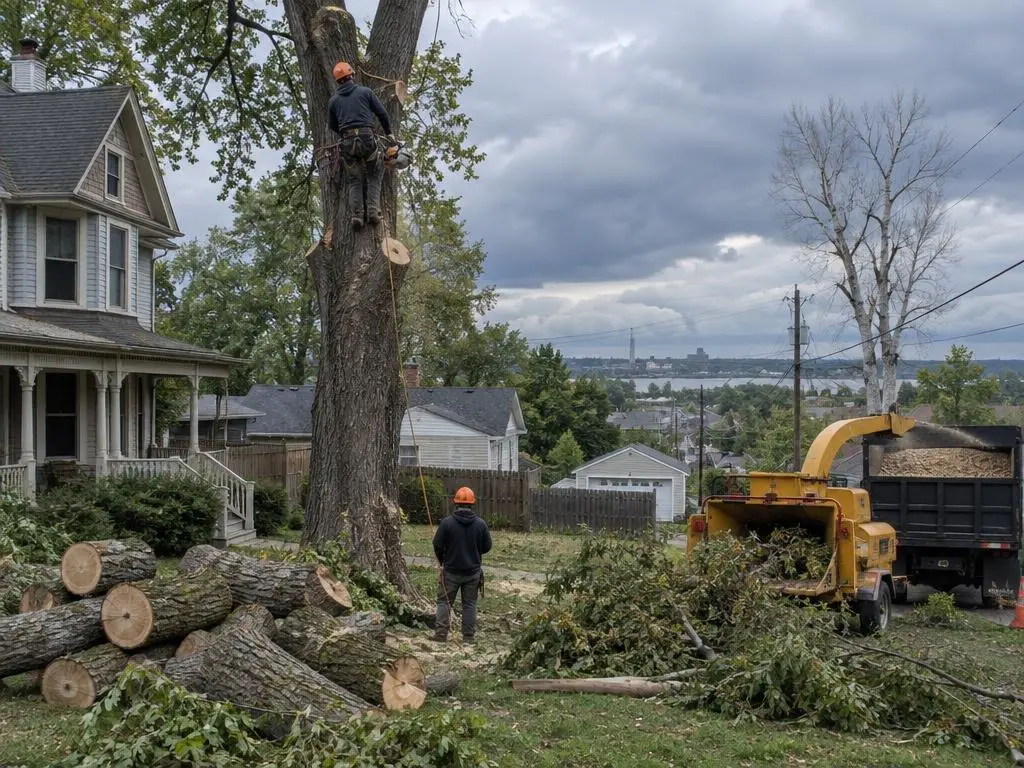
Dead and Diseased Tree Removal Costs at a Glance
| Job | Published range |
|---|---|
| Diseased tree removal (Angi) | $400 to $900 |
| Ash tree removal (HomeGuide) | $650 to $2,000 |
| Extra for poor tree health (Angi) | up to about 15% more |
| Hard-to-reach or unsafe site (Angi) | 25% to 50% more |
| Tree 30 to 60 ft, any condition (Angi) | $450 to $1,200 |
National ranges from Angi (2026) and HomeGuide (2026). Brittle wood that needs a lift or crane costs more. Your written estimate is the price.
Step by Step
1. Inspect the tree
We check how dead, how decayed and how climbable it is, and what it could hit.
2. Choose a method
Climbing, lift or crane, based on the condition of the wood.
3. Remove in sections
Pieces cut small and lowered so dead limbs do not snap and fall.
4. Handle the wood
Chipped, cut for local firewood or hauled away.
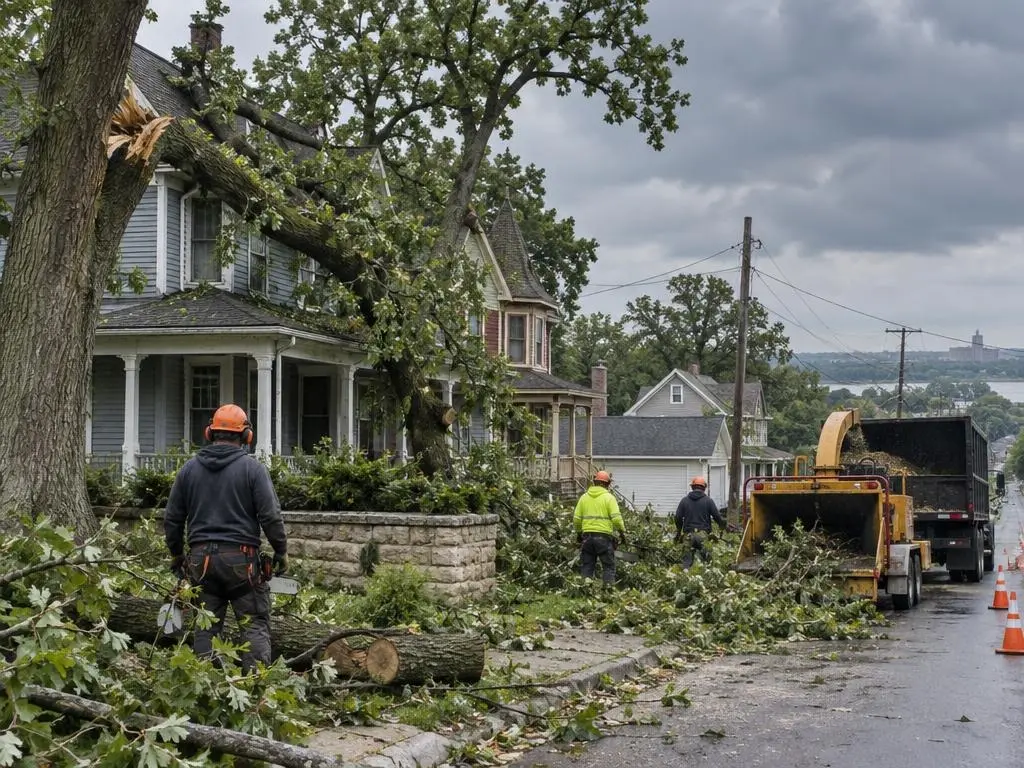
Dead Tree Removal Questions
Is a dead tree more expensive to remove than a live one?
Often, yes. Dead wood breaks unpredictably, so the work goes slower, and a lift or crane may be needed. Angi notes poor tree health can add up to about 15%. Removing a tree soon after it dies keeps the cost down.
Can my ash tree be saved?
Possibly, if it is still mostly healthy. Insecticide treatment, repeated on a schedule, can protect valuable ash. Once a large share of the crown is gone, treatment rarely brings it back, and removal is the safer path.
How do I know if my tree is dead or just dormant?
In late spring, compare it with similar trees nearby. A tree with no leaves when its neighbors have leafed out, bark falling off in sheets, or twigs that snap dry instead of bending is likely dead. A light scratch on a twig showing brown instead of green under the bark is another clue.
My neighbor's dead tree hangs over my house. What can I do?
Talk to your neighbor first, since the tree is theirs to remove. If it stands in the parkway between the sidewalk and the curb, it is a city tree: report it to Joliet's Forestry Division at 815-724-3650, and the city will inspect it and schedule removal. We can look at a private tree and give the owner a written quote.
The city painted a number on the ash tree in front of my house. What does that mean?
It means Joliet's Forestry Division has put that parkway ash on its removal list; the number reflects the trunk's circumference, and the color means nothing. The city warns that with so many infested ash, removal can take five to seven years after marking. If you would rather keep a healthy parkway ash, the city allows residents to treat it at their own cost with a permit, but Forestry must tag it for non-removal first and wants receipts each year the treatment is repeated. Ash in your own yard is a separate matter, and we can tell you whether it is still worth treating.
Dead Tree Removal Service Areas
- Tree Removal in Joliet, IL
- Tree Removal in Lockport, IL
- Tree Removal in New Lenox, IL
- Tree Removal in Shorewood, IL
- Tree Removal in Crest Hill, IL
- Tree Removal in Romeoville, IL
- Tree Removal in Mokena, IL
- Tree Removal in Frankfort, IL
- Tree Removal in Minooka, IL
- Tree Removal in Channahon, IL
- Tree Removal in Plainfield, IL
- Tree Removal in Manhattan, IL
- Tree Removal in Homer Glen, IL
- Tree Removal in Elwood, IL
- Tree Removal in Wilmington, IL
- Tree Removal in Braidwood, IL
- Tree Removal in Coal City, IL
- Tree Removal in Lemont, IL
- Tree Removal in Morris, IL
- Tree Removal in Monee, IL
- Tree Removal in Tinley Park, IL
- Tree Removal in Orland Park, IL
- Tree Removal in Frankfort Square, IL
- Tree Removal in Bolingbrook, IL
Get a Dead Tree Removal Estimate
Get a dead or dying tree looked at before the next storm.